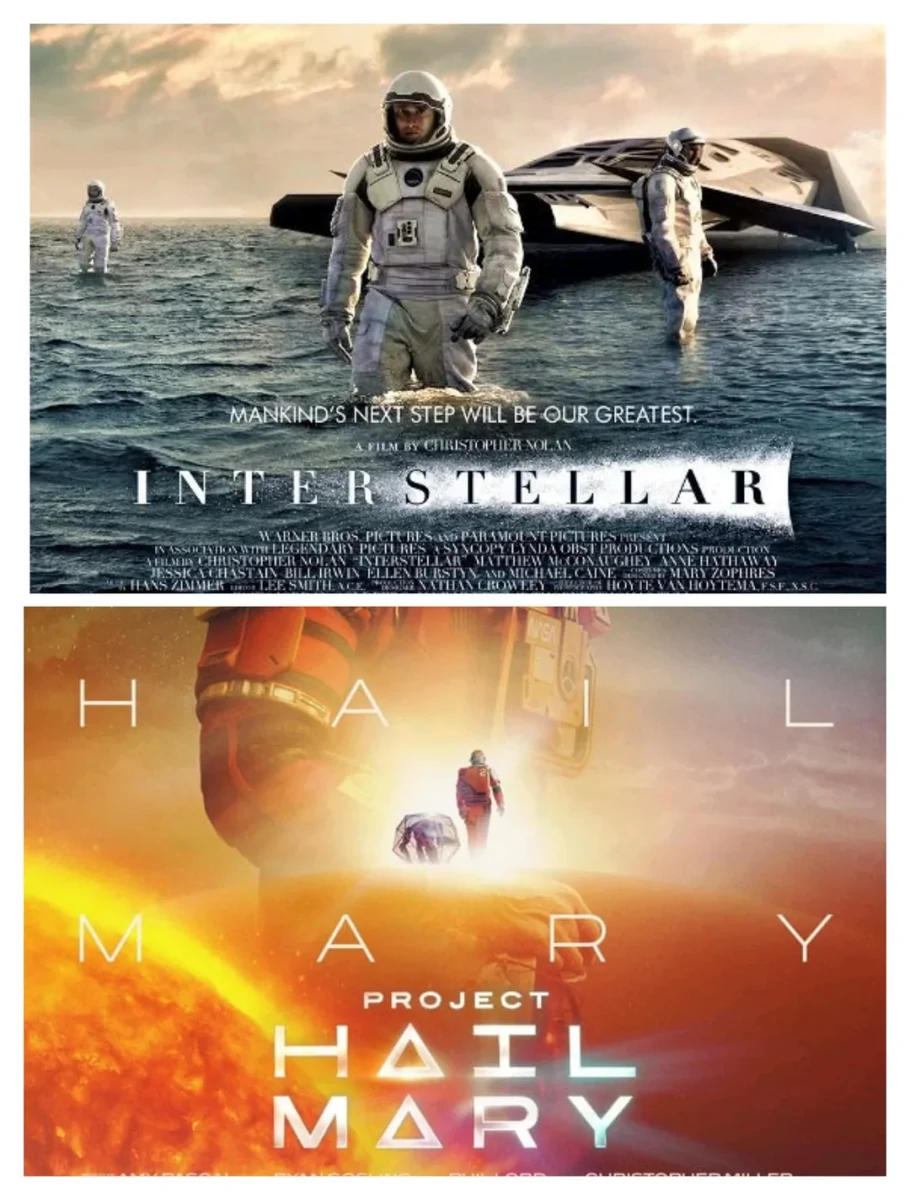
Project Hail Mary and Interstellar are very similar films, but have very different styles. One relies on practical filmmaking techniques, while the other uses modern visual effects and technology. Many fans debate which is better, and while both focus on space travel, survival, and the future of humanity, they take different producing approaches to tell their stories.
When Interstellar was made in 2014, director Christopher Nolan wanted to create as much of the film physically as he could. Instead of relying entirely on computer-generated imagery, CGI, Nolan and his team built large spacecraft interiors, realistic sets, and even planted hundreds of acres of corn for Earth scenes. Many space sequences were filmed using massive screens outside spacecraft windows. This allowed actors to react to visuals in real time rather than imagining them on a green screen.
Christopher Nolan even worked closely with physicist Kip Thorne to ensure that the portrayal of black holes, wormholes, and relativity was scientifically accurate. The production became known for creating one of the most realistic visual representations of a black hole ever seen in film.
Project Hail Mary, based on Andy Weir’s bestselling novel, takes a different route. The story needs a lot more visual effects since much of it occurs on a spacecraft far from Earth. The adaptation includes an alien character named Rocky, whose look and movements will use CGI and motion-capture technology. Unlike Interstellar, which focused on practical sets whenever feasible, Project Hail Mary combines physical sets with extensive digital environments to create locations and characters that would be impossible to build in real life.
Another key difference is in storytelling style. Interstellar was written as a screenplay from the beginning, designed for cinematic experience. In contrast, Project Hail Mary must adapt a novel filled with scientific explanations, flashbacks, and internal thoughts. This presents filmmakers with the challenge of translating complex science and narration into visuals that the audience can easily understand.
The two productions also show changes in filmmaking technology over the past decade. Advances in CGI, virtual production, and motion-capture tools enable Project Hail Mary to create scenes that would have been much tougher and more costly when Interstellar was made. Meanwhile, Interstellar remains a landmark example of practical filmmaking and real-world effects.
Both projects tell inspiring stories about survival and discovery in space, but their production methods reflect two different eras of science fiction filmmaking—one rooted in practical realism and the other driven by modern digital innovation.