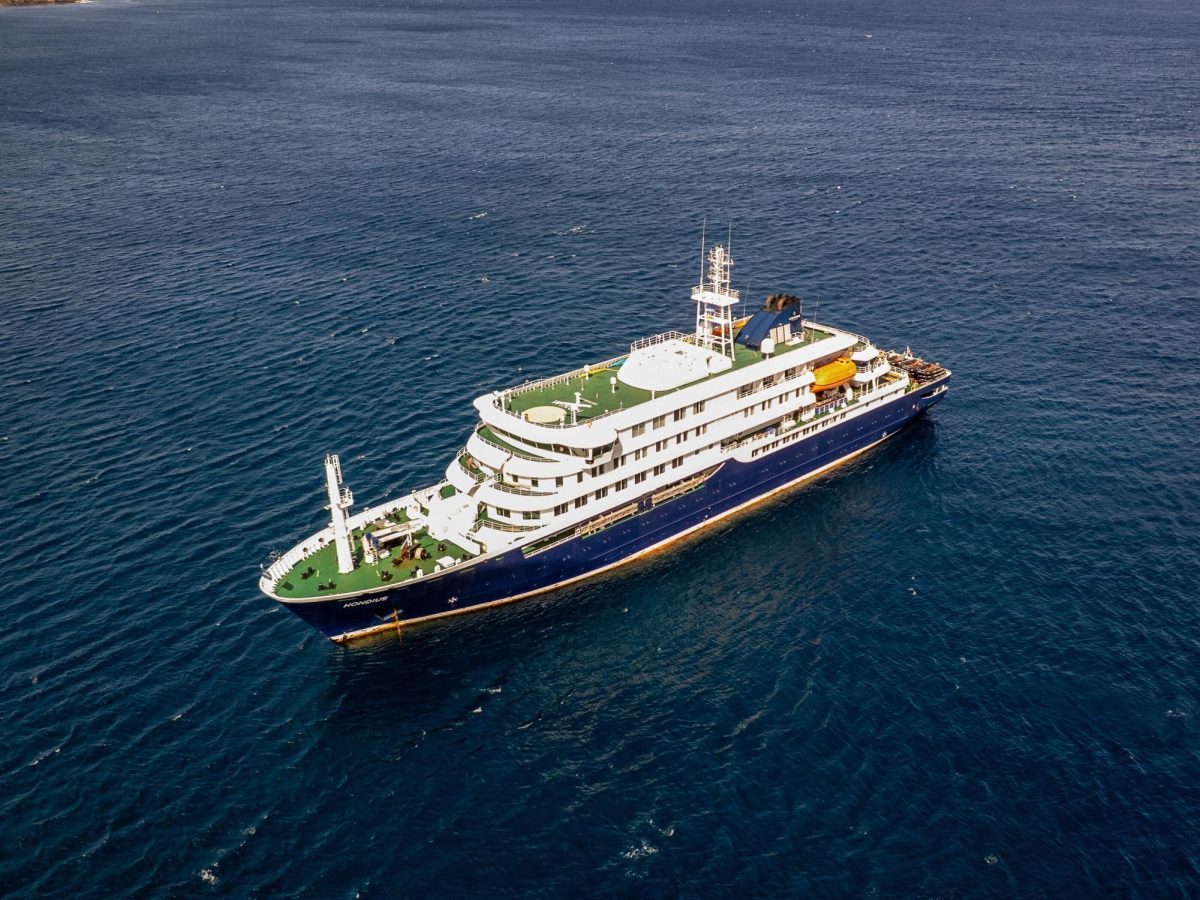
Everyone knows when work or school gets too stressful, coworkers or classmates become too irritating, or reality just becomes too overwhelming, that that’s your queue to take a vacation. Today, a record number of people are overall increasingly choosing cruises over the traditional ground-based trips. Cruises offer the convenience of being able to travel to multiple destinations, all only within a week and only having to pack/unpack once. Yes, a cruise ship is all-inclusive and predominantly a stress-free experience, but is it worth the risk of going catastrophically bad?
The sinking of the “Royal Mail Steamer” Titanic in the year of 1912, remains one of the deadliest and widely known ship disasters in history. The ship struck a huge iceberg during its voyage across the Atlantic. This collision resulted in the death of more than 1,500 passengers and workers on board. This horrible, notorious disaster exposed the unpreparation and poor planning the Titanic had. Since then, although cruise ship technology has improved, it shows how situations like these are unpredictable and preparation for accidents may not always be enough.
In 2013, the “Poop Cruise” took over all broadcasting systems and became infamous after an engine fire. The cruise’s true name was “Carnival Triumph”, and it was left stranded in the Gulf of Mexico. The passengers lived without any power. With all electrical systems failing, toilets stopped working and sewage was backed up in the hallways. The horrible stench and conditions were unbearable. Limited food, no air conditioning, and absolutely no sanitation raised public concern of reliability over all modern cruise ships. Luckily there were no deaths, but overall this cruise showed horror of the failure of mechanical systems at sea.
Recently, concerns of the “Hantavirus Cruise” have been surfacing the internet like crazy. It has reached all social media platforms, and many have taken into account to voice their opinion on this tragic situation. Hantavirus, also known as “Orthohantavirus”, is a family of viruses spread primarily through rodents that causes severe or fatal respiratory or kidney diseases in humans. Since cruise ships carry large amounts of food, and visit many different locations, the attraction of rats or mice isn’t uncommon. People believe that this disease may have started at one of the many vacant islands the cruise visited. Many are concerned that the “Orthohantavirus” will become the next global pandemic, forcing the world into another quarantine. However, authorities are taking extra precautions in order to avoid any other outbreaks of the deadly virus, while also successfully bringing home passengers who are not experiencing any symptoms.
From the Titanic in 1912, to the “Hantavirus Cruise” today, incidents involving poor preparation, failed mechanical systems, or sanitation issues can easily become dangerous when many passengers are living closely together out on sea.